Staying power
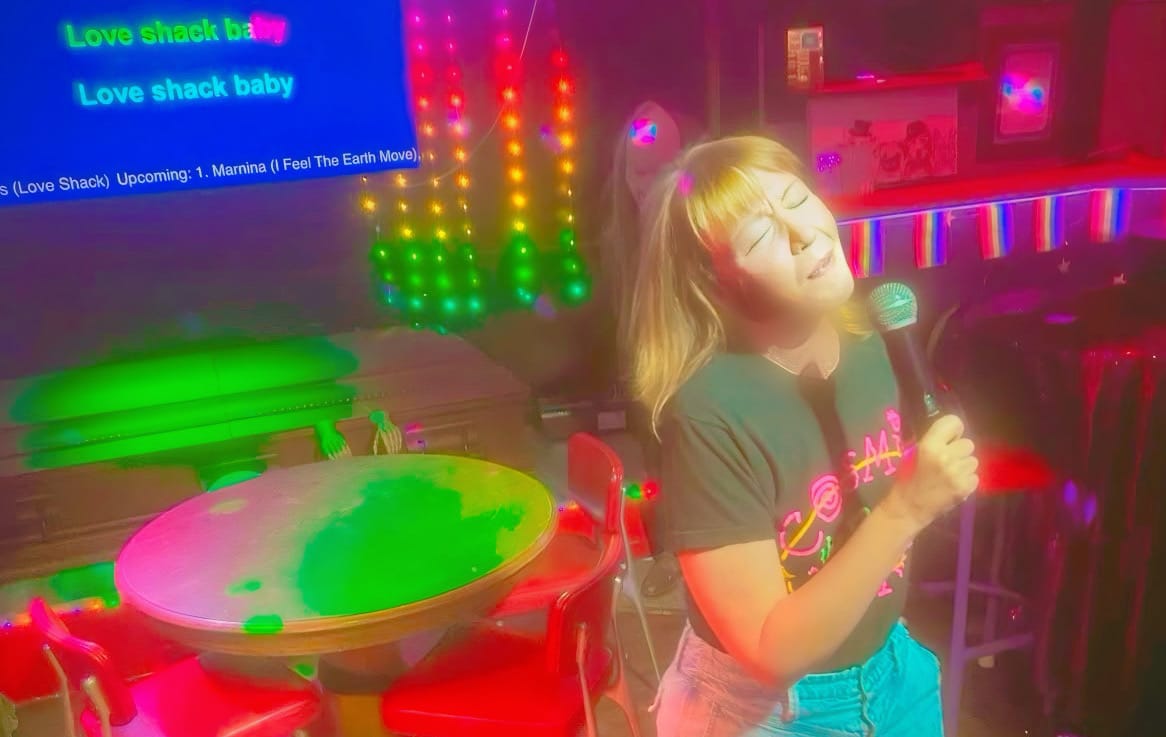
The best thing about living alone is the endless space for judgement-free, one-sided expression: Voicing out of context phrases aloud just to hear how they sound, mimicking a line delivery from a podcast or TV show for fun, psych-ward-tier conversational engagement with pets, and best of all, singing.
I sing aloud often and at full volume. I'm inclined to feel guilty about subjecting my wall-sharing neighbor to this, but he's a veteran theater actor who also has upwards of 30 credits on IMDB. He hosted Zoom readings of plays in his backyard during the height of COVID lockdown. He too, takes full advantage of the self-expression that so often coincides with living alone.
Of course I sing in the shower and along to the radio while driving, but the best bits of spontaneous singing tend to happen while I'm just hanging around. And I have a go-to, "Love is Here to Stay" by George & Ira Gershwin. On the surface, it's a bit of an outlier for someone who made a career opining on crowd-pleasers that scan way more niche.
But nothing hits quite like locking into a song that's built the way those Great American Songbook standards are built. "Love is Here to Stay" was composed just before George Gershwin's death in 1937 (his final composition), it was published in 1938 and initially performed by Kenny Baker in the 1938 film The Goldwyn Follies. For cultural context, we're about a year into FDR's second term, Great Depression conditions are still present, and just a few years later we'll see America's entry into World War II. Songs like this one, the rest of the Gershwin canon and those by Irving Berlin, Aaron Copland, Rodgers & Hart, etc. are structurally sound in a way that both juxtaposes and rises to the occasion of the times from whence they came.
But I first encountered "Love is Here to Stay" in a Santa Monica college music class that was taught by a very good professor whose name I cannot remember. It was assigned to me, taught to me. The name of the professor didn't stick, but the technical proficiency he instilled for delivering this simple standard perfectly within my vocal range really did. So it's just a thing I have available to me when I've been sitting too long in silence, when my thoughts have drifted away from whatever podcast was keeping me company while doing the dishes. I find it hilariously ironic, as someone mostly uninterested in romantic love, that the song that suits me best in the world is a soft jazz standard about a love so firmly entrenched that it will withstand everything from natural disasters, to technological advancements without breaking a sweat.
And somehow, somewhere along the way, as my attachment to this particular song grew, an intrusive thought crept in that still plagues me. What if these songs actually vanish from cultural memory? What if we do enter into the increasingly likely scenario where public arts education no longer exists? What if high school and college vocal jazz groups (requisite cringe very much included) just aren't a thing anymore? It does feel safe to assume that this won't happen in my lifetime. Surely there are dozens of 15 year olds scattered throughout the country (maybe even the world) who are, at this very moment, practicing their part for the group arrangement of "I Got Rhythm" in their school's end of year review. This is what I tell myself, at least.
I also have the comfort of knowing that "Love is Here to Stay" is so deeply worn into the grooves of my own brain that whether or not the world moves on, I never have to. My impromptu concertos are very much here to stay.